


How to Prepare Your Goan Business for the Peak Tourist Season on Digital Platforms

October 17, 2026
Estimated Read Time: 6 Minutes
Table of Contents
1. Getting Your Google Business Profile Ready for Peak Season2. Preparing Your Website for More Visitors and Enquiries
3. Planning Your Digital Marketing and Paid Advertising
4. Managing Hotel Bookings and Inventory with STAAH
5. Is Your Goan Business Ready for Peak Season?
6. Frequently Asked Questions
Key Takeaways
- Peak-season digital preparation should begin before demand reaches its busiest period, particularly for hotels, villas, resorts and restaurants competing for tourist enquiries.
- An accurate Google Business Profile, responsive website and clear booking process help potential customers find, evaluate and contact your business.
- Local SEO in Goa, seasonal content, social media and paid advertising serve different purposes and should work towards a common business objective.
- Accommodation providers using multiple booking platforms can benefit from STAAH channel management to coordinate rates and availability and reduce manual booking errors.
- Digital readiness is not only about increasing visibility. It is also about converting enquiries, managing bookings and delivering on what your marketing promises.
Goa’s peak tourist season creates valuable opportunities for hotels, resorts, private villas, restaurants and other hospitality businesses. But increased visitor numbers also mean increased competition, with travellers comparing accommodation, dining options, locations, prices and reviews long before making a decision.
For businesses investing in digital marketing in Goa, the preparation should begin before the busiest weeks arrive. Your Google Business Profile needs accurate information, your website must make enquiries and bookings straightforward, and your advertising should reach the right audience at the right stage of their travel planning.
At Rubiq Solutions, we work across digital marketing, website development, SEO and hospitality distribution technology. One principle guides our approach to seasonal readiness. Bringing more visitors to your digital platforms is only valuable when those platforms are prepared to turn interest into actual business.
Here’s where we recommend Goan businesses focus their attention before peak season.
Getting Your Google Business Profile Ready for Peak Season
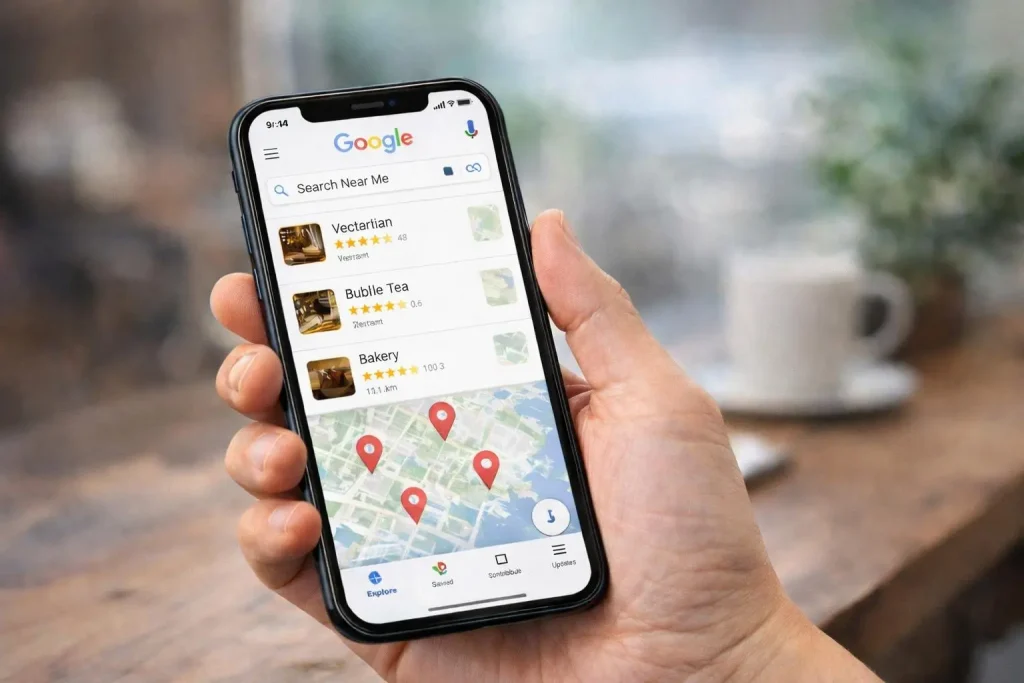
Your Google Business Profile is often among the first places a potential customer encounters your business. A traveller looking for a restaurant in Candolim, a resort in Calangute or a private villa in Assagao may discover your listing through Google Search or Maps before visiting your website.
That makes accuracy essential. An incorrect phone number, outdated restaurant menu or misplaced map pin introduces unnecessary friction at the exact moment someone is considering your business.
Start by checking your business name, location, contact details, website link, operating hours and primary category. Restaurants should also verify their dining hours, current menu information and reservation options. Accommodation providers should ensure that property photographs, amenities and contact details accurately represent what guests can expect.
Seasonal operating changes deserve particular attention. If your restaurant extends its hours during Christmas and New Year, for example, those changes should be reflected in the appropriate Google Business Profile settings.
Photographs and reviews are equally important. Recent, accurate images can help travellers assess your rooms, restaurant ambience, facilities or dining experience. Meanwhile, genuine customer reviews provide useful information that often influences booking decisions.
Encourage guests to share honest feedback and respond professionally to reviews, including critical ones. Google does not permit incentives for reviews or selectively soliciting positive feedback.
This forms an important part of local SEO in Goa. An accurate and well-maintained profile helps Google understand your business and gives customers more confidence in choosing it. However, local rankings also depend on relevance, distance and prominence, so profile optimisation should be approached as an ongoing effort rather than a guarantee of top placement.
At Rubiq, our SEO approach considers how businesses appear across local search results, their websites and other relevant online platforms, with the objective of improving discovery and helping customers find reliable information.
Preparing Your Website for More Visitors and Enquiries
An increase in website traffic is valuable only if visitors can find what they need and take the next step.
Travellers may discover your property while researching on their phones, comparing accommodation during a journey or searching for a restaurant after arriving in Goa. In each situation, your website has a limited opportunity to answer their questions and make the booking process easy.
Start with the mobile experience. Test how quickly important pages load, whether images display correctly and whether contact, enquiry and booking buttons work without difficulty. A visually attractive website can still lose potential customers if its navigation is confusing or its booking process requires too many steps.
The next priority is information. A hotel website should clearly present its room categories, location, facilities, policies and booking options. Private villa websites should explain the number of bedrooms, occupancy arrangements, amenities and enquiry process. Restaurants need accessible menus, opening hours, location details and a straightforward way to reserve a table or make an enquiry.
Seasonal search content can also play an important role. A resort in Dona Paula might publish a practical guide to nearby attractions, while a restaurant could help travellers understand its cuisine, dining experience and location. The objective is to answer relevant customer questions, not publish generic articles simply to target more keywords.
Our approach to website development in Goa combines design, performance and functionality with the needs of the business and its customers. For hospitality brands, that means making the journey from discovery to enquiry or booking as clear as possible.
Before increasing advertising budgets, we recommend testing that journey from start to finish. If a guest cannot complete a booking, submit an enquiry or contact your team easily, additional traffic may only expose an existing problem.
Planning Your Digital Marketing and Paid Advertising
Different digital channels serve different purposes during Goa’s tourist season. Search advertising can reach people actively comparing options, social media can influence destination and brand preferences, and organic search content can support discovery over a longer period.
The important decision is not simply where to advertise, but what you want each channel to accomplish.
Reaching Travellers with High-Intent Search Ads
Google Search campaigns can help businesses reach potential customers who are already looking for specific accommodation, dining experiences or services.
A traveller searching for a private pool villa in North Goa has a different requirement from someone researching the best areas to stay in Goa. Likewise, someone searching for a restaurant near Baga may be much closer to making a dining decision than a person casually browsing food content on Instagram.
Effective paid ads for Goan businesses should therefore consider customer intent, location, seasonality and the availability of the product being promoted.
At Rubiq, our performance marketing services focus on aligning campaigns with business objectives. For a hotel, that might mean generating direct booking enquiries for available room categories. For a restaurant, the objective may be increasing reservations or enquiries for particular dining experiences.
Advertising can generate visibility quickly, but performance depends on several factors, including competition, budget, targeting, pricing and the experience customers have after clicking the advertisement.
Keeping Social Media Relevant to the Season

Social media plays a different role. It allows businesses to communicate their atmosphere, experiences and offerings before a customer actively begins searching for them.
For a resort, this could mean showcasing room categories, dining experiences, amenities and nearby attractions. For a restaurant, content might focus on signature dishes, ambience, entertainment schedules or dining occasions that are particularly relevant during the tourist season.
Seasonal content should be planned around what the business can genuinely deliver. Promoting a sold-out festive dinner, unavailable room category or outdated offer creates unnecessary confusion for customers and staff.
At Rubiq, our social media team brings together content planning, copywriting, design, creative production and platform management. We use these capabilities to help brands communicate consistently while giving individual offerings a clear purpose.
Reconnecting with Previous Guests and Interested Audiences
Businesses should also consider customers who have already shown interest in their brand.
Past guests may be interested in returning for another holiday, while previous restaurant customers could be receptive to relevant seasonal experiences. Website visitors who explored a particular room or offer may also be suitable for remarketing where the necessary permissions and advertising-platform conditions are met.
The opportunity is to communicate something relevant rather than repeatedly advertising the same generic promotion.
Returning customers may already be familiar with your experience, but that does not automatically make every remarketing campaign more cost-effective. Audience quality, the offer and campaign performance still need to be measured.
Good digital marketing in Goa should therefore combine new customer acquisition with relevant communication for existing audiences, supported by appropriate measurement and customer-data practices.
Managing Hotel Bookings and Inventory with STAAH

Marketing can increase demand, but accommodation businesses also need systems capable of managing bookings across multiple channels.
A hotel may receive reservations through its website, Booking.com, Agoda and other online travel agencies. When rates and availability are maintained manually across different platforms, the risk of errors increases, particularly when bookings, cancellations and modifications arrive close together.
This is where a channel manager becomes valuable.
STAAH allows accommodation providers to manage room rates and availability across connected distribution channels from a central platform. When configured correctly, updates are communicated to connected channels, reducing repetitive manual work and helping minimise the risk of overlapping reservations.
It is important to distinguish a channel manager from a booking engine. The channel manager coordinates inventory and distribution, while the booking engine enables guests to make reservations directly through a property’s website. Both can contribute to a more organised accommodation booking process.
At Rubiq, we provide STAAH hospitality solutions for accommodation businesses, including channel management and booking-engine options. For hotels and resorts preparing for peak season, we recommend reviewing room mapping, rate plans, availability, booking restrictions and connected systems before demand intensifies.
Technology reduces operational risks, but it does not remove the need for regular checks. Incorrect inventory allocation, mapping issues or incomplete system integrations can still affect booking accuracy.
For restaurants, the requirement is different. Rather than hotel inventory management, the focus should be on handling table reservations, enquiries, menu updates and customer communication through appropriate systems.
The principle remains the same across hospitality businesses. Your digital platforms and operational processes need to work together so that the experience promised online can actually be delivered.
Is Your Goan Business Ready for Peak Season?
Before investing in additional marketing, we recommend reviewing the entire customer journey, from the first online search to the final booking confirmation.
A practical peak-season check should answer five questions:
- Can customers find accurate information about your business? Review your Google Business Profile, website, contact details, menus, photographs and operating hours.
- Can customers enquire or book without unnecessary difficulty? Test your mobile website, enquiry forms, call buttons, WhatsApp links and applicable booking systems.
- Are you promoting the right offerings to the right audience? Review seasonal demand, available inventory, relevant customer segments and campaign objectives.
- Are your teams prepared to manage incoming demand? Make sure enquiries reach the right people, responses are timely and booking information remains accurate.
- Are you measuring business results? Track relevant enquiries, reservations, booking conversions and campaign performance rather than judging success on traffic or impressions alone.
Not every business needs a complete website redesign or a large advertising campaign before the season. Some may benefit more from fixing their mobile booking process, improving local visibility or correcting outdated information. Others may need a coordinated approach across search, social media, advertising and hospitality technology.
At Rubiq Solutions, we help businesses identify these priorities through our digital audits, SEO, website development, performance marketing, social media services and STAAH solutions.
Our objective is to ensure that the different parts of a business’s digital presence work together, rather than operating as disconnected activities.
Peak-season readiness is ultimately about more than attracting attention. It is about being discoverable, communicating clearly, responding efficiently and making it easier for customers to choose your business.
Prepare Your Business Before the Season Gets Busy
Peak tourist season can bring more enquiries, reservations and opportunities to Goan businesses. Whether those opportunities convert into revenue depends partly on how well your digital presence and booking processes are prepared.
From improving local search visibility and website performance to planning paid ads for Goan businesses and supporting hotels with STAAH, Rubiq Solutions brings together the digital services needed to prepare for seasonal demand.
If your hotel, villa, resort or restaurant needs a clearer digital strategy before the season picks up, connect with our team to discuss your priorities.
You focus on delivering the experience. We’ll help make it easier for customers to find and book it.
Frequently Asked Questions
Ideally, preparation should begin several weeks before your expected increase in enquiries. Website improvements, Google Business Profile updates and booking-system checks should be prioritised early, while SEO content may require a longer period to build visibility. Advertising timelines should consider advance-booking behaviour and the specific offerings being promoted.
Local SEO in Goa helps businesses improve how accurately and effectively they appear in relevant local searches. This includes maintaining an accurate Google Business Profile, optimising website content, making contact and location information accessible, and building a credible online reputation. It does not guarantee a particular ranking position.
The choice depends on business objectives and customer behaviour. Google Search ads are useful for reaching people actively searching for specific offerings, while social media advertising can help introduce experiences, build interest and engage relevant audiences. A combination may be appropriate when budgets and business goals justify it.
STAAH helps accommodation providers manage rates and availability across connected online booking platforms. It reduces the need for repetitive manual updates and can lower the risk of inventory errors and overbookings when correctly configured. Hotels should still monitor reservations, room mapping and connected systems regularly.
Yes. Rubiq offers services including SEO, website maintenance and development, paid advertising, social media management and hospitality distribution solutions. The appropriate starting point depends on the business's existing digital setup, immediate challenges and commercial priorities.