

Google Ads vs Meta Ads: How to Decide Where Your Ad Budget Should Go
October 27, 2026
Estimated Read Time: 8 Minutes
Table of Contents
1. The Real Difference Between Google Ads and Meta Ads2. When Google Ads Makes More Sense
3. When Meta Ads Makes More Sense
4. If You Have ₹1 Lakh to Spend, Should You Split It?
5. Matching the Platform to Your Business Type
6. A Simple Framework for Deciding
7. How Rubiq Builds a Paid Advertising Strategy
8. Frequently Asked Questions
Key Takeaways
- The Google Ads vs Meta Ads decision usually comes down to intent and discovery. Google captures people who are already searching, while Meta helps create attention, interest and recall.
- A strong Google Ads strategy works best when the customer already knows what they need and is actively searching for it.
- A strong Meta Ads strategy works best for visual brands, awareness-building, retargeting and categories where people need to see the product before they desire it.
- A good paid advertising strategy does not split the budget blindly. It matches spend to buyer behaviour, platform strength, creative quality and conversion goals.
- Rubiq helps businesses decide where ad budgets should go by studying intent, sales cycle, landing pages, creative readiness, tracking and lead quality.
Every business with a marketing budget eventually asks the same question.
Google Ads or Meta Ads?
It sounds like a platform question, but it is really a buyer-behaviour question.
Is your customer already searching for what you sell? Or do they first need to see it, remember it, desire it and then act? That difference decides far more than platform popularity ever will.
At Rubiq, we do not begin by asking which platform is trending. We begin by asking how the buyer discovers, compares and decides. Only then does the platform choice make sense.
A business can waste money on Google Ads by bidding on the wrong intent. It can waste money on Meta Ads by showing attractive creatives to people who were never likely to buy. The issue is rarely the platform alone.
The issue is whether the strategy matches the business.
That is the real starting point for any paid advertising strategy.
The Real Difference Between Google Ads and Meta Ads
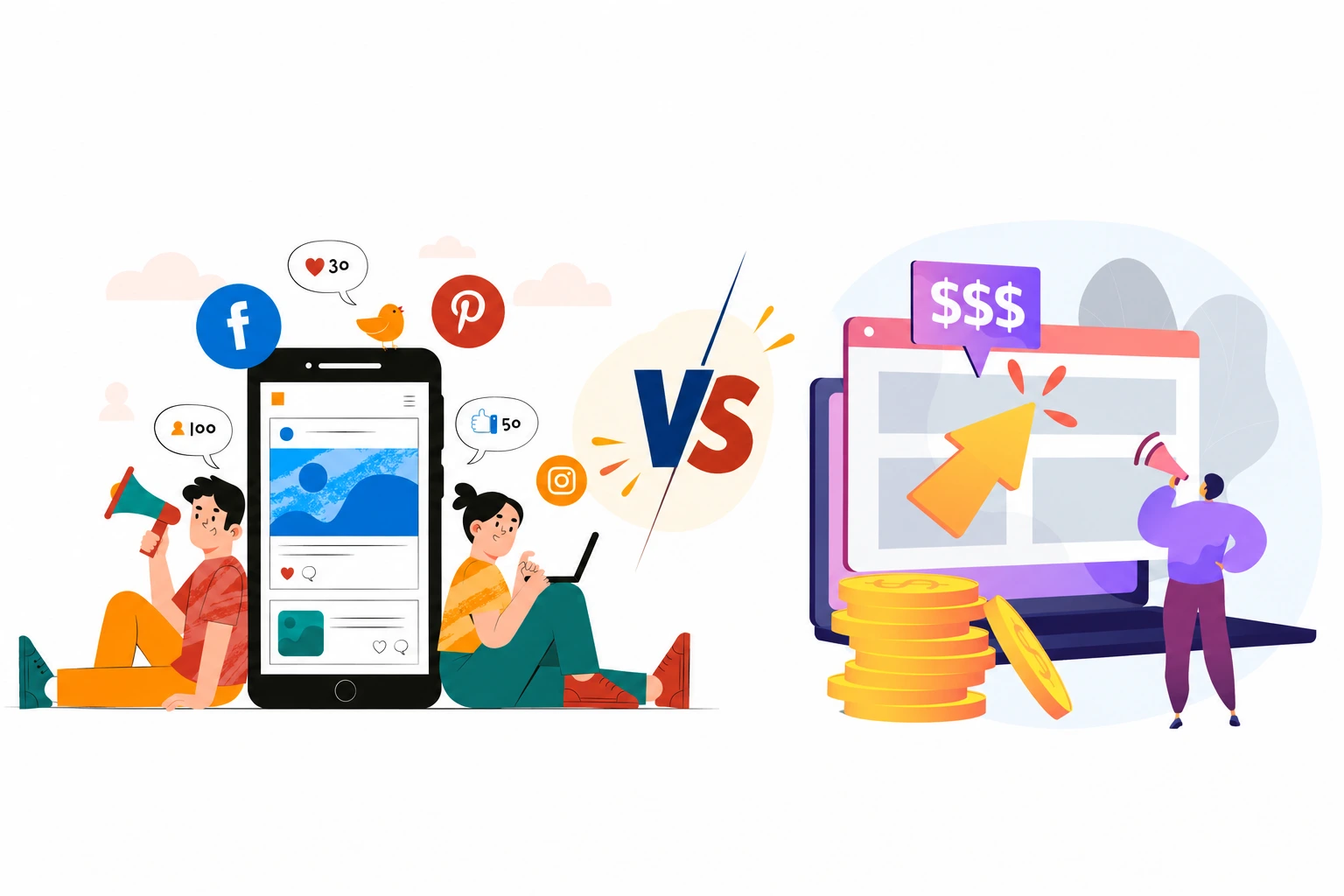
Google Ads and Meta Ads are often spoken about as if they are interchangeable.
They are not.
Google Ads works strongest when people are already looking for something. Someone types “best dentist near me,” “luxury villas in Goa,” “hotel in Candolim,” or “3PL logistics company in India” because a need already exists. Your ad appears in response to that need.
That is why Google Ads is powerful for high-intent categories.
It captures demand.
Meta Ads works differently. People are usually not searching when they see your ad on Instagram or Facebook. They are scrolling, watching, comparing, saving, reacting or discovering. The ad has to earn attention inside the feed.
That is why Meta Ads is powerful for visual categories, awareness, retargeting and desire-building.
It creates discovery and recall.
Neither platform is automatically better.
Google helps when demand already exists. Meta helps when demand needs to be created, shaped or remembered. The right platform depends on what your business sells, how people choose it and how long they take to decide.
When Google Ads Makes More Sense
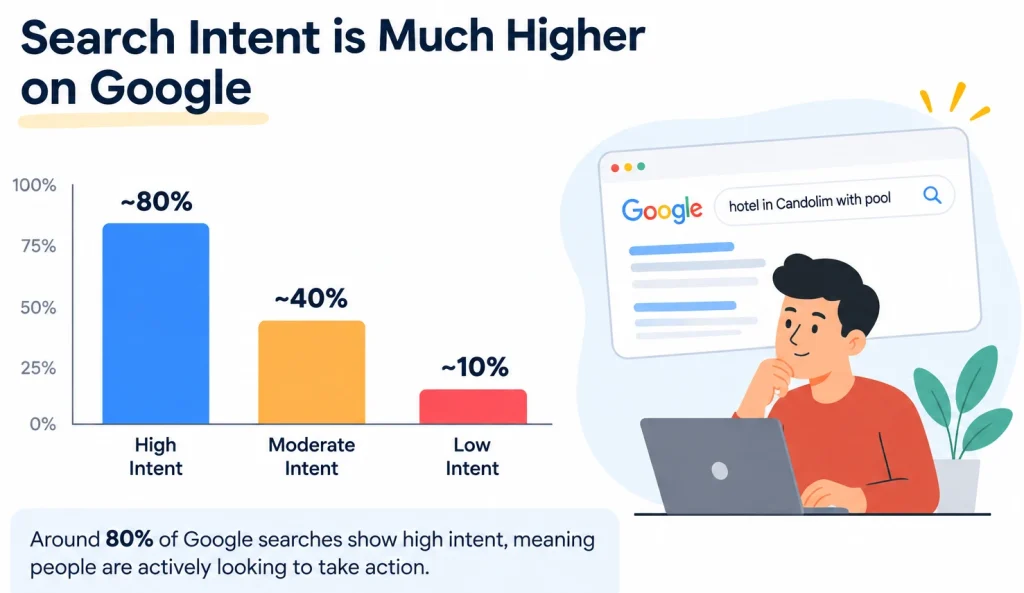
Google Ads makes sense when a customer is already searching with intent.
This is common in service-led, local, urgent or research-heavy categories. A person searching for a dentist, plumber, resort, property consultant, visa service, logistics provider or software tool is not casually browsing. They are trying to solve something.
A strong Google Ads strategy works well when:
- The customer knows what they need
- Search volume exists for the product or service
- Keywords show buying or enquiry intent
- The landing page is strong enough to convert
- The offer is clear
- Calls, enquiries, bookings or leads matter more than reach alone
Google is especially useful when the buyer is close to action.
For example, someone searching “hotel in Candolim with pool” is already thinking about a stay. Someone searching “real estate marketing agency in Goa” is already looking for support. Someone searching “logistics services in India” already has a business problem to solve.
In these moments, the job of advertising is not to create the need from scratch.
The job is to show up, answer quickly and make the next step easy.
That is where Google Ads can perform well.
When Meta Ads Makes More Sense
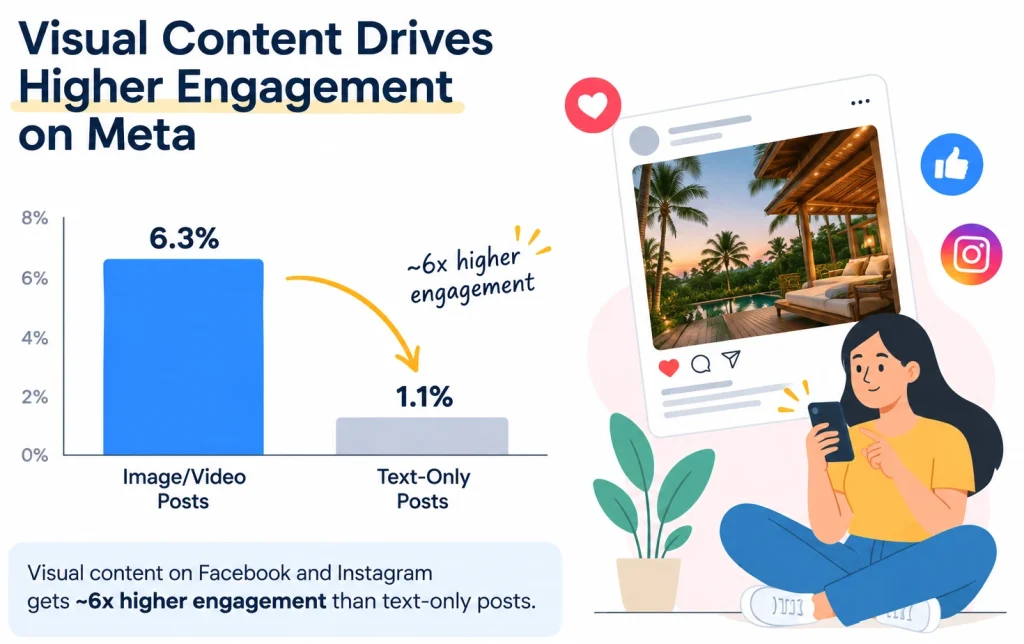
Meta Ads makes sense when the customer needs to see, feel or remember the brand before taking action.
This is why visual categories often perform well on Instagram and Facebook. Hospitality, food, fashion, interiors, events, real estate lifestyle, beauty, wellness and local experiences all benefit from strong visuals.
A strong Meta Ads strategy works well when:
- The product or experience is visually appealing
- The brand needs awareness before conversion
- The audience may not be searching yet
- Creative quality can influence desire
- Retargeting can bring interested users back
- The business needs reach, engagement, enquiries or profile visits
Meta is not only for pretty pictures.
It works when the creative understands the audience. A resort reel can make someone consider a weekend plan they had not searched for yet. A restaurant carousel can create dinner intent by showing the right dish at the right time. A real estate video can introduce a location before the buyer begins searching that area seriously.
Meta Ads also support retargeting well. Someone who visited your website, watched your reel, engaged with your post or opened a lead form may not convert immediately. Meta can keep the brand visible while that person continues deciding.
In simple terms, Meta is useful when attention comes before search.
If You Have ₹1 Lakh to Spend, Should You Split It?
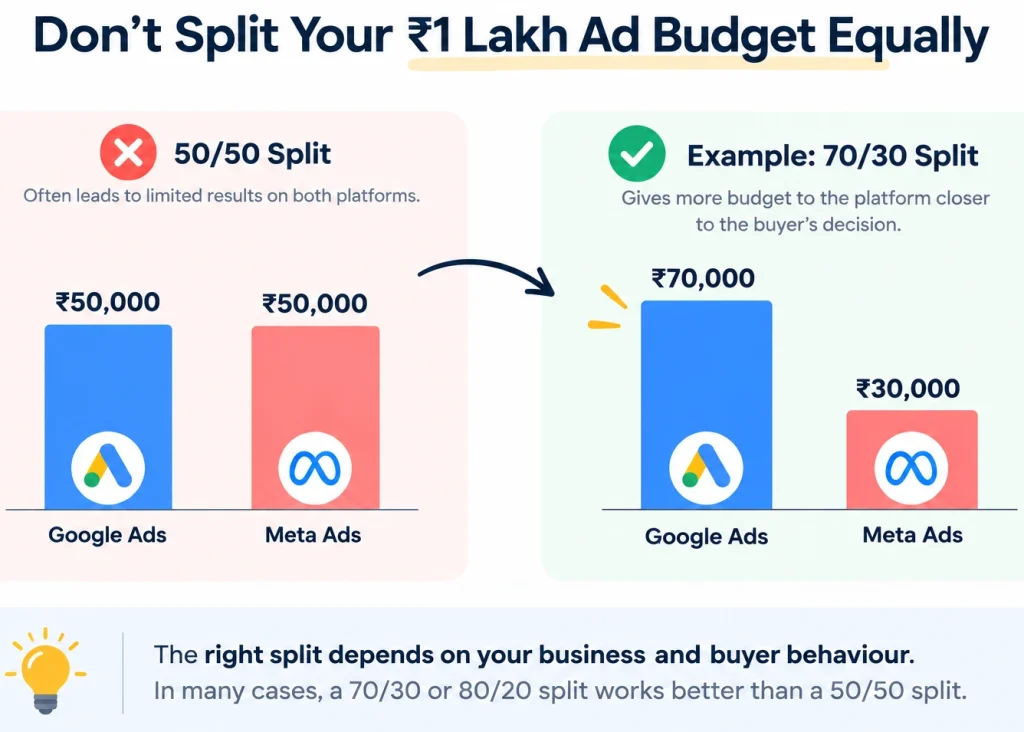
₹1 lakh is a meaningful ad budget for many small and mid-sized businesses.
But it should not automatically be split 50/50 between Google and Meta.
A blind split often weakens both campaigns. Google may not get enough budget to compete on strong keywords. Meta may not get enough creative testing or audience learning. Both platforms may produce some activity, but not enough clarity.
The better question is not:
How do we divide the budget equally?
The better question is:
Which platform is closer to the buyer’s decision?
If your business already has strong search demand, Google may deserve the larger share. If your business depends on visuals, impulse, discovery or remarketing, Meta may deserve the larger share. In many cases, a 70/30 or 80/20 split makes more sense than a neat half-and-half split.
For example:
- A logistics company may put most of the budget into Google Search and use Meta lightly for credibility or remarketing.
- A restaurant may put most of the budget into Meta and use Google for brand, location or “near me” searches.
- A boutique resort may use Meta for visual discovery and retargeting, while Google captures high-intent stay searches.
- A real estate developer may need both, with Google capturing location and property searches while Meta builds awareness and remarketing.
The budget should follow buyer behaviour.
Not habit. Not guesswork. Not what worked for someone else.
Matching the Platform to Your Business Type
Different businesses need different ad systems.
| Business Type | Better Starting Point | Why |
| Local service business | Google Ads | People search when they need the service |
| Boutique resort or hotel | Meta Ads plus Google support | Visual discovery matters, but search captures booking intent |
| Restaurant or café | Meta Ads | Food, ambience, offers and events are highly visual |
| Real estate developer | Google Ads plus Meta retargeting | Buyers research actively and need repeated trust |
| Logistics or B2B service | Google Ads | Search intent is more problem-led and specific |
| Beauty or wellness clinic | Google Ads plus Meta Ads | Search captures need, Meta builds trust and recall |
| Specialty retail brand | Meta Ads plus Google support | Meta creates desire, Google captures later search |
| Education or training institute | Google Ads plus Meta Ads | Parents and students search, but also respond to proof and content |
This table is not a rulebook.
It is a starting point.
A hotel with weak visuals may not get much from Meta. A restaurant in a competitive location may still need Google. A real estate brand without good landing pages may waste search traffic. A B2B company with a strong educational funnel may use Meta more than expected.
The platform is only one part of the decision.
The full system matters.
A Simple Framework for Deciding
Before spending on ads, ask three questions. These will usually reveal whether Google, Meta or a combination deserves the larger share of your budget.
Is the Customer Already Searching?
If the customer is already typing your service, product, location or problem into Google, start with search intent.
This is where Google Ads often works well. The buyer is already in motion. Your campaign needs the right keywords, ad copy, landing page and conversion path.
But intent has to be real.
There is a difference between someone searching “digital marketing tips” and someone searching “digital marketing agency in Goa.” One is learning. The other may be looking to hire.
Does the Product Need to Be Seen First?
Some products and services need visual proof before people care enough to search.
A resort room, restaurant dish, wedding venue, clinic transformation, villa interior, fashion product or lifestyle experience often needs to be seen before it is desired.
This is where Meta earns its place.
But the creative cannot be generic. The ad must show the product clearly, build trust and give the viewer a reason to act.
How Long Is the Sales Cycle?
A short sales cycle can often be handled with direct-response campaigns.
A long sales cycle needs more patience.
Real estate, healthcare, education, B2B and high-ticket services rarely convert from one ad touch. The buyer may need to see the brand several times, visit the website, compare options, read reviews, ask questions and return later.
In these cases, Google and Meta should work together.
Google captures active research. Meta keeps the brand visible. Retargeting brings people back. Content answers doubts. Landing pages convert the ones who are ready.
That is a strategy.
Not just ad spend.
How Rubiq Builds a Paid Advertising Strategy
At Rubiq, we treat advertising as part of a larger digital system.
The question is not only whether a business should run Google Ads or Meta Ads. The real question is whether the brand is ready to turn traffic into enquiries, leads, bookings or sales.
That is why our process looks at the full path.
Through our Digital Marketing work, we help businesses plan campaigns across Google, Meta, SEO, social media, content and performance marketing. Through our Digital Business Audit, we identify where a brand may be losing visibility, traffic, trust or conversions before more money is spent.
For hotels and resorts, our Hospitality Solutions connect paid ads with websites, booking engines, direct booking goals, social media and guest engagement.
For property developers and brokers, our Real Estate Solutions bring together website development, Google Business Profile setup, social media management, content production and lead generation campaigns across Google and Meta.
This matters because ads do not work in isolation.
A campaign can bring traffic, but a weak landing page can lose it. A reel can create interest, but poor follow-up can waste it. A Google campaign can generate leads, but without tracking and lead-quality review, the business may not know what is actually working.
Rubiq helps businesses think through:
- Platform choice
- Budget allocation
- Search intent
- Audience targeting
- Creative direction
- Landing pages
- Lead forms
- Conversion tracking
- Retargeting
- Weekly optimisation
- Reporting
- Lead quality review
The goal is not to spend more.
The goal is to spend with more clarity.
Whether that means a Google-led campaign for a logistics company, a Meta-first campaign for a restaurant, a split funnel for a resort, or a Google and Meta system for real estate, the platform choice should be strategic.
Not automatic.
Plan Your Next Ad Campaign With Rubiq
View this post on Instagram
Before you spend your next ad budget, make the platform decision properly.
Do not choose Google Ads because someone said search leads are better. Do not choose Meta Ads because Instagram looks more active. Do not split the budget equally just to feel safe.
Ask how your buyer actually decides.
Are they searching now? Do they need to discover you first? Will they compare for weeks? Does your landing page convert? Is your creative strong enough? Is your tracking clean?
That is where Rubiq can help.
As a digital marketing agency in Goa, Rubiq builds paid advertising strategies around business goals, buyer behaviour, creative, search intent, landing pages, tracking and lead quality.
Whether you need a Google Ads strategy, a Meta Ads strategy or a connected paid advertising strategy across both platforms, start with the right conversation before you spend.
Contact Rubiq to plan your next campaign with more clarity.
Rohang Naik
★★★★★Rubiq is one of the best Digital Marketing agency in Goa, they have a strong team who are passionate and dedicated to giving clients the absolute outcome and give them standing out abilities in their market competition. The team is also friendly and know what they’re good at! 👍💯
Frequently Asked Questions
Yes, if your business has both search demand and a visual or awareness-led buying journey. The important thing is not to split the budget evenly by default. Give the larger share to the platform that is closer to the customer’s decision.
₹1 lakh can be enough to learn and generate results when the campaign is focused. It becomes weaker when spread across too many platforms, audiences, creatives and goals at once. The industry, location, competition and landing page quality all affect performance.
For a new business, the answer depends on demand. If people are already searching for the product or service, Google Ads may be the better starting point. If the business first needs visibility, trust and visual discovery, Meta Ads may work better.
Hotels and resorts usually benefit from both. Meta helps show rooms, food, views, experiences and offers visually. Google helps capture people actively searching for stays, locations and booking options. The split depends on season, occupancy goals and direct booking strategy.
Real estate often needs both Google and Meta. Google captures buyers actively searching for properties, locations or developers. Meta helps build awareness, retarget interested users and show the lifestyle or investment story behind the project.
B2B businesses often lean toward Google because buyers search when they need a specific solution. However, Meta can still support credibility, remarketing, employer branding or educational content depending on the category.
Most campaigns need enough time and data before they can be judged fairly. Instead of reacting in the first few days, review performance over a reasonable testing window and check impressions, clicks, leads, lead quality, cost per result and conversion rate together.
A strategic digital marketing agency in Goa should not favour one platform by default. The right agency should study the business model, buyer intent, creative strength, competition, landing page, budget and sales cycle before recommending Google Ads, Meta Ads or both.