


AI Search Readiness Audit: What Goa Business Websites Should Fix Before Chasing GEO, AEO and AI Overviews
August 21, 2026
Estimated Read Time: 8 Minutes
Table of Contents
1. Why AI Search Readiness Starts Before GEO2. What Goa Businesses Usually Get Wrong
3. Fix the Page Before You Fix the Prompt
4. Make Your Content Answer Real Buyer Questions
5. Build Proof Into Every Important Page
6. Clean Up Local, Technical and Structured Signals
7. What an AI Search Readiness Audit Should Check
8. Frequently Asked Questions
Key Takeaways
- Generative engine optimization is not separate from good SEO. Your website still needs crawlable pages, clear content, useful answers and trusted signals.
- AI search rewards pages that explain the business clearly, answer specific user questions and show real experience.
- Many Goa websites fail because they look attractive but do not explain rooms, locations, pricing logic, buyer fit, services, proof or next steps clearly.
- AEO and AI Overview readiness depend on better page structure, stronger answers and original business insight.
- A proper audit should review content, UX, technical SEO, local SEO, schema, internal linking and conversion paths together.
- Rubiq supports this through Digital Audit, Website Design & Development, Digital Marketing, Hospitality Solutions and Real Estate Solutions.
Why AI Search Readiness Starts Before GEO

Everyone wants to appear in AI answers now.
The hotel wants to show up when someone asks, “Where should I stay in South Goa with my family?”
The villa developer wants to be cited when an NRI asks, “Is buying a villa in North Goa a good idea?”
The clinic wants to appear when a patient asks, “Which doctor should I consult for this problem in Goa?”
The restaurant wants to be found when a traveller asks, “Where can I eat near Candolim without going somewhere too touristy?”
That is the new search behaviour. People are not only typing keywords. They are asking questions, comparing options and expecting a useful answer before they even click a website.
But here is the problem.
Most websites are not ready for that kind of search.
They have beautiful banners, vague claims, service lists, thin blogs and pages that say what the business does without explaining why it matters to the customer. Then the business asks for generative engine optimization, AEO or AI Overview visibility.
That is like asking for a hotel review before the guest has checked in.
Before chasing AI visibility, the website has to be clear enough for a person to understand and structured enough for search systems to read. That is where an AI Search Readiness Audit begins.
What Goa Businesses Usually Get Wrong
In Goa, we see a similar pattern across industries.
A hospitality website may show a pool, a beach and a room gallery, but not explain who the property is best for. A couple, a family and a remote-working guest may all need different information. If the page does not answer those needs, it becomes just another hotel website.
A real estate website may list villas, plots or apartments, but not explain location context, buyer fit, possession stage, rental potential, lifestyle use, maintenance realities or what makes the project different from another development five minutes away.
A local service business may mention “best quality,” “trusted team” and “affordable pricing,” but never explain process, timelines, qualifications, service areas, expected outcomes or what customers should know before booking.
This is where many websites lose both human trust and AI search relevance.
Search today is moving towards answers. That means your website cannot depend only on keywords. It must explain the business in a way that a reader can trust, compare and act on.
If a page says “luxury resort in Goa,” it sounds like everyone else.
If it explains who should stay there, what kind of Goa day it supports, what guests can do without leaving the property and how the location changes the stay, it becomes more useful.
That difference matters.
Fix the Page Before You Fix the Prompt
AEO and GEO conversations often become too technical too quickly.
People ask about prompts, schema, AI crawlers, mentions and tools. Those may matter in some cases, but they cannot rescue a weak page.
A weak page usually has three problems.
First, it does not answer the searcher’s actual question. Someone searching for website development in Goa may not only want a developer. They may want to know whether the team can build a site that loads well, ranks, converts and reflects their business properly.
Second, it does not show enough proof. A business may say it understands hospitality, but the page should show that understanding through room pages, booking flows, local SEO, OTA dependency, direct booking logic and guest search behaviour.
Third, it does not make the next step obvious. A user should know whether to call, enquire, book, compare services, view work or ask for an audit.
This is why Rubiq looks at websites as business assets, not only design projects. A page must look good, but it must also explain, rank, persuade and convert. That is the purpose of strong Website Design & Development.
Before asking whether your website can appear in an AI Overview, ask this first:
Would a real customer feel more confident after reading this page?
If the answer is no, the page is not ready for AI search either.
Make Your Content Answer Real Buyer Questions

AI search is exposing weak content.
The old way of writing blogs was simple. Pick a keyword, write an introduction, add generic subheadings and end with a call to action. That may still fill a content calendar, but it rarely creates authority.
A stronger page starts with buyer behaviour.
For a hotel, the real questions may be:
Is this better for couples or families?
Is the beach actually close?
Will I need to leave the resort for every meal?
Is this area too crowded?
Which room type should I choose?
What happens if I visit during the monsoon?
For a real estate project, the real questions may be:
Who is this project built for?
Is this location better for end-use or investment?
What makes the configuration practical?
What should an NRI check before buying?
How does the project compare with other parts of Goa?
What stage is the property in?
For a service company, the real questions may be:
What exactly happens after I enquire?
How long does the work take?
Who handles strategy and execution?
What do I need to provide?
How will success be measured?
These questions are not decorative. They are the foundation of AEO.
When content answers real questions clearly, it becomes easier for users, search engines and AI systems to understand. That is why SEO content today needs more than keyword placement. It needs first-hand business insight, clean structure and useful judgement.
Our Digital Marketing work connects SEO, content, performance campaigns and social visibility so that pages are not written in isolation from the wider customer journey.
Build Proof Into Every Important Page
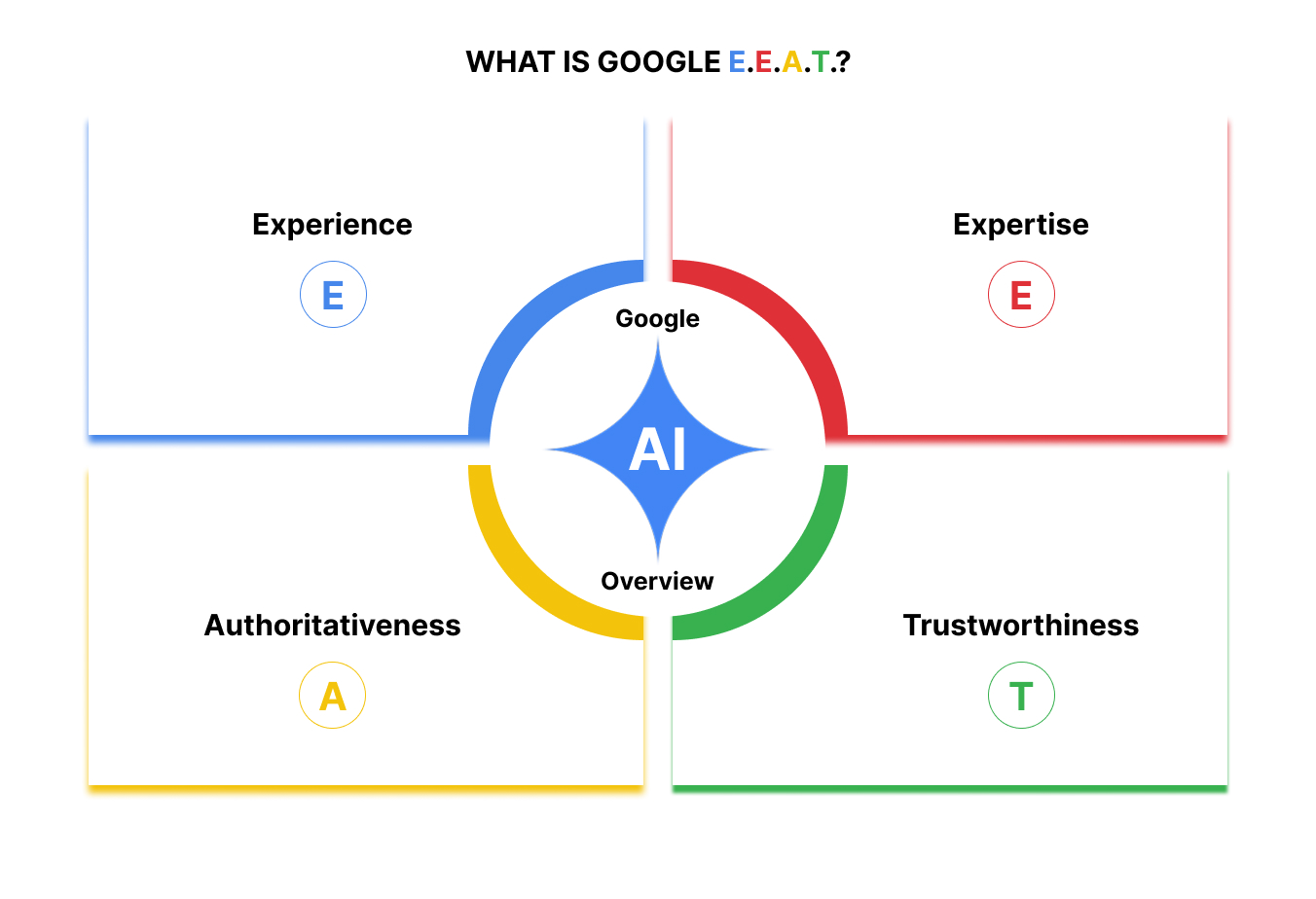
E-E-A-T is not something you add at the end of a page.
It is built through details.
A hotel page becomes more trustworthy when it explains actual room types, dining options, facilities, location behaviour, guest fit and booking advantages. A real estate page becomes stronger when it explains configuration, neighbourhood context, buyer segment, possession status, lifestyle use and practical ownership considerations. A service page becomes clearer when it explains process, deliverables, team involvement and expected outcomes.
This is especially important for Goa businesses because many categories are crowded.
A traveller comparing resorts in Candolim will see many similar claims. A buyer looking at villas in North Goa will see many similar promises. A business owner searching for an SEO company in Goa will see many agencies saying they improve rankings.
The difference comes from proof.
Not every proof point has to be a number. Some proof comes from how deeply the page understands the customer. Some comes from showing a process. Some comes from specific examples. Some comes from clear service pages, useful FAQs, case-style content, original photos, location-led insights and internal links that guide the reader properly.
For hospitality brands, Rubiq’s Hospitality Solutions connect websites, booking engines, SEO, ads, content, social media and direct booking tools so that the guest journey does not break between discovery and enquiry.
For real estate brands, our Real Estate Solutions focus on website development, Google Business Profile setup, content, social media and lead generation so that buyer interest has a stronger digital path.
That is what AI search readiness really means. Your website should not merely exist online. It should give enough proof to be trusted, compared and cited.
Clean Up Local, Technical and Structured Signals
A website can have good content and still underperform if the basics are broken.
During an AI Search Readiness Audit, technical checks matter because Google and AI-led search experiences still need to access, understand and trust your pages.
For Goa businesses, the common issues include slow pages, weak mobile layouts, thin service pages, missing location context, duplicate content, poor internal linking, unclear headings, broken links, outdated blogs, missing image alt text and weak Google Business Profile alignment.
Local signals are especially important. A hotel in Candolim, a clinic in Panaji, a school in Margao or a real estate company serving North Goa should not hide location information deep inside the website. Service areas, neighbourhoods, landmarks and business details should be clear where they help the user.
Structured data can also help with normal search visibility when used properly. But it is not a magic shortcut. Schema cannot fix weak content. FAQs cannot fix vague service pages. A blog cannot fix a slow website. A beautiful homepage cannot fix poor enquiry flow.
This is why the audit has to look at the full system.
Content, SEO, UX, design, speed, local visibility and conversion paths must work together. That is where Rubiq’s Digital Audit becomes useful. It reviews the website as a business tool, not as a collection of pages.
What an AI Search Readiness Audit Should Check
A useful audit should not give you a long PDF full of jargon. It should show what is stopping the website from being understood, trusted and chosen.
For a Goa business, the audit should check:
- Whether core service, room, property or product pages answer real customer questions
- Whether headings are clear enough for readers and search systems
- Whether pages explain location, audience fit, process and proof
- Whether important pages are crawlable and indexable
- Whether mobile users can read, compare and enquire easily
- Whether the website has thin, duplicate or outdated content
- Whether FAQs answer decision-stage questions instead of repeating the page
- Whether internal links guide users to useful next steps
- Whether images, videos and alt text support the content
- Whether Google Business Profile, website content and local SEO signals are aligned
- Whether enquiry, booking or lead forms are easy to complete
- Whether analytics and Search Console are properly reviewed
The goal is not to impress AI systems. The goal is to make the website easier to understand for everyone.
A good website should be clear to a customer, useful to Google and strong enough for AI systems to extract accurate answers from it. That is the real foundation for generative engine optimization, AEO and AI Overview visibility.
Get Your Website Ready Before AI Search Moves Further Ahead
AI search is not waiting for businesses to catch up.
If your website is vague, thin, slow or built only around what your business wants to say, it will struggle to earn trust in traditional search and AI-led discovery. If it answers real questions, explains your value clearly and gives search systems a clean structure to work with, it has a stronger chance of being found, understood and chosen.
Start with a Digital Audit by Rubiq and find out what your website should fix before chasing GEO, AEO and AI Overviews.
Frequently Asked Questions
GEO, or generative engine optimization, is often used to describe visibility in AI-led search experiences. But for Google Search, the foundation is still strong SEO: crawlable pages, useful content, technical clarity, original insight and trusted signals.
A Goa business can improve its chances by building pages that answer specific customer questions, show real experience, stay technically accessible and align with Google’s search quality expectations. No agency can guarantee AI Overview inclusion, but a better website improves discoverability.
A hospitality website should first fix room pages, location content, dining information, FAQs, booking paths, direct booking messaging and local SEO signals. Guests should quickly understand who the property is for, what the stay feels like and why they should book directly.
A real estate website should improve project pages, location explanations, configuration details, buyer-fit content, enquiry flow, internal linking and proof. Buyers need clarity before they enquire, especially for high-value property decisions.
A local SEO team understands how Goa customers, travellers, property buyers and service users search differently by location, season and intent. Rubiq combines SEO, website development, content, digital audits and industry-specific solutions to help businesses prepare for both traditional search and AI-led discovery.